Tesla’s 2024 Robotaxi Event: Key Announcements and What to Expect for the Future of Transportation
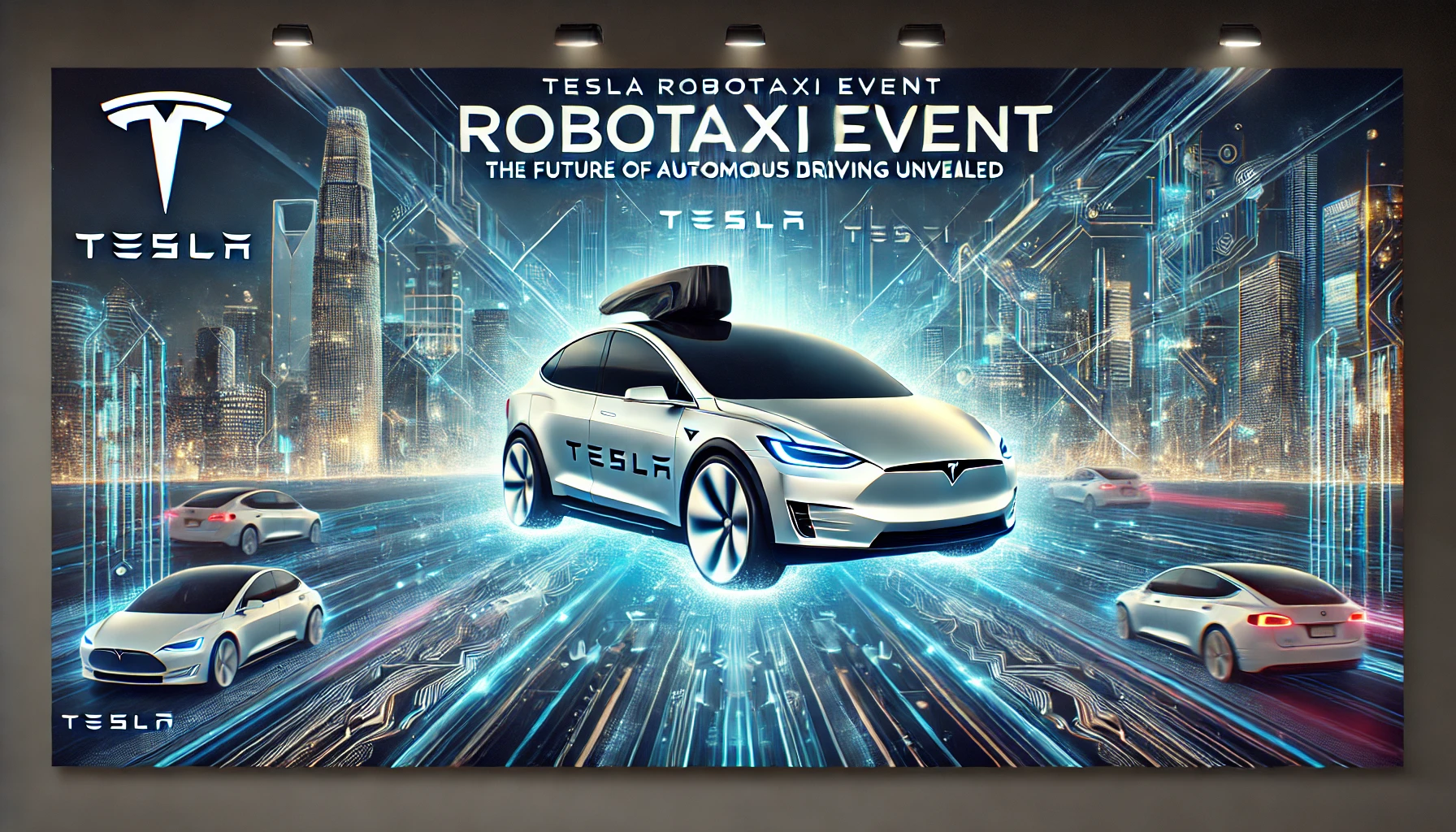
Elon Musk’s Tesla Robotaxi event is on the horizon, and anticipation is higher than ever. Tesla has long been a leader in the electric vehicle (EV) market, but the company is now setting its sights on a new frontier: autonomous vehicles. The Tesla Robotaxi represents Tesla’s vision of a future where self-driving cars dominate urban transportation. At the upcoming event, Musk will unveil details that could reshape not only Tesla’s trajectory but also the future of mobility.
This blog will delve into what we can expect from the Tesla Robotaxi event, including insights into the Tesla autonomous vehicle ecosystem, the potential timeline for the Tesla self-driving car, and how Tesla’s AI and Full-Self Driving (FSD) technology could create a $1 trillion market opportunity.
Tesla Robotaxi: Revolutionizing Autonomous Transportation
The Tesla Robotaxi is set to become a pivotal piece in Elon Musk’s vision for the future of transportation. Designed as a fully autonomous vehicle, the Robotaxi aims to provide convenient, affordable transportation without the need for human drivers. Musk first hinted at this concept in 2019, and after years of development, the project is nearing its unveiling.
What is the Tesla Robotaxi?
The Tesla Robotaxi is a fully autonomous, electric vehicle designed to operate without human intervention. It’s expected to be part of a broader Tesla Robotaxi network, where users can summon the vehicle via an app—similar to how ride-hailing services like Uber and Lyft operate today, but without the driver.
Tesla’s self-driving cars rely solely on cameras and AI-driven Full Self-Driving (FSD) software, eliminating the need for LiDAR or radar used by competitors like Waymo. Musk has repeatedly stated that Tesla’s autonomous technology will surpass human drivers in safety and reliability.
Tesla Cybercab: A New Form Factor?
One of the key rumors swirling around the Robotaxi event is that Tesla may introduce a new autonomous model, rumored to be called the Cybercab. This smaller, more cost-effective version of Tesla’s cars would allow for greater scalability and affordability. If launched, the Tesla Cybercab could be the flagship model for the Robotaxi network, offering consumers low-cost rides in cities around the world.
What to Expect from the Robotaxi Event 2024
As we look ahead to the Robotaxi event 2024, it’s important to understand what Musk and Tesla may reveal. While many details remain speculative, industry experts have some predictions about what we might see.
Potential Timeline for Tesla Robotaxi Deployment
One of the most pressing questions is when the Tesla Robotaxi will be commercially available. While previous timelines from Musk have been optimistic, the general expectation is that Tesla may not deploy its fleet until 2026. This timeline would allow for continued refinement of Tesla’s Full-Self Driving (FSD) technology and the scaling of its AI-driven infrastructure.
According to reports, Musk may use the event to confirm a more concrete Tesla Robotaxi timeline, giving investors and customers a clearer idea of when the vehicle will hit the streets.
Tesla AI and Full-Self Driving: The Core of Autonomous Vehicles
Tesla’s autonomous driving capabilities are built on the foundation of its AI and FSD software. During the event, Musk is expected to emphasize how Tesla’s proprietary AI algorithms and machine learning models are driving the self-driving car forward. The company’s Full-Self Driving technology has been a major focus of development, with Tesla continuously releasing updates to improve its performance.
Experts believe that Tesla’s FSD, combined with its ability to deploy AI across a fleet of vehicles, could unlock immense value. In fact, Tesla’s FSD and AI-driven Robotaxi network are expected to create a market opportunity worth $1 trillion, transforming Tesla from a car manufacturer into a leader in autonomous mobility solutions(markets.businessinsider.com)(Teslarati).
The Financial and Industry Impact: Tesla’s $1 Trillion Valuation
The unveiling of the Tesla Robotaxi is more than just a technical showcase; it could be a pivotal moment for Tesla’s financial future. According to Wedbush analysts, the Tesla Robotaxi network represents a potential $1 trillion market, driven by demand for autonomous transportation. The ability to deploy self-driving cars at scale would revolutionize urban mobility, slashing the cost per mile and creating new revenue streams for Tesla(Teslarati)(CMC Markets).
How Robotaxis Could Revolutionize Ride-Hailing
Tesla’s Robotaxi network could also disrupt the current ride-hailing industry, posing a significant challenge to companies like Uber and Lyft. Without the need to pay human drivers, Tesla’s Robotaxis could offer cheaper, more efficient transportation options. This advantage could position Tesla to dominate urban transportation, especially as cities shift towards more sustainable and automated solutions.
Tesla’s Competitors: Can They Keep Up?
Tesla is not alone in the race for autonomous driving. Companies like Waymo and Cruise have already launched autonomous vehicles in select cities, including San Francisco and Phoenix. However, Tesla’s edge lies in its data-driven approach. With millions of Tesla vehicles already on the road, the company has access to an unparalleled amount of real-world driving data, which is crucial for training its AI systems.
That said, competitors like Waymo use a combination of sensors, including LiDAR, to improve safety, which has been praised for its accuracy. It will be interesting to see how Tesla’s camera-based system stacks up against the sensor-heavy approaches of its competitors during the Robotaxi event(CMC Markets).
Tesla’s Long-Term Vision: Beyond Cars to AI-Driven Solutions
While Tesla is best known for its electric cars, Musk has consistently positioned the company as a leader in AI and energy solutions. The Tesla Robotaxi is part of a larger strategy to integrate AI into multiple facets of Tesla’s business, from energy storage to self-driving technology.
Tesla’s AI and FSD: Pushing the Boundaries
Musk has called AI and FSD the backbone of Tesla’s future growth. In addition to developing autonomous vehicles, Tesla is also working on AI-driven products like Optimus, a humanoid robot designed to handle repetitive tasks. During the Tesla Robotaxi event, Musk may provide updates on how Tesla’s AI capabilities will evolve, especially in relation to the Robotaxi network.
Tesla’s Market Impact: A $1 Trillion Company?
If Tesla can successfully deploy its Robotaxi network and scale its FSD technology, the company could reach a $1 trillion valuation. Tesla’s current market position as an electric vehicle leader, combined with its advancements in AI and energy storage, gives it a unique opportunity to dominate multiple sectors.
Tesla’s Robotaxi Event Is a Defining Moment for the Company
The upcoming Tesla Robotaxi event could mark a significant turning point in the company’s history. With expectations running high, Tesla’s unveiling of the Robotaxi and updates on its Full-Self Driving (FSD) technology could reshape the transportation industry and push Tesla toward a $1 trillion valuation.
As we await the event, it’s clear that the Tesla Robotaxi has the potential to transform urban mobility, disrupt the ride-hailing industry, and further cement Tesla’s role as a leader in AI-driven solutions. Investors, customers, and competitors alike will be watching closely to see how Elon Musk and Tesla deliver on this ambitious vision.
For more insights on emerging technology trends and the future of AI, visit Regent Studies and stay informed on the latest industry developments.
For additional coverage on the event and Tesla’s future, check out this article from Teslarati.