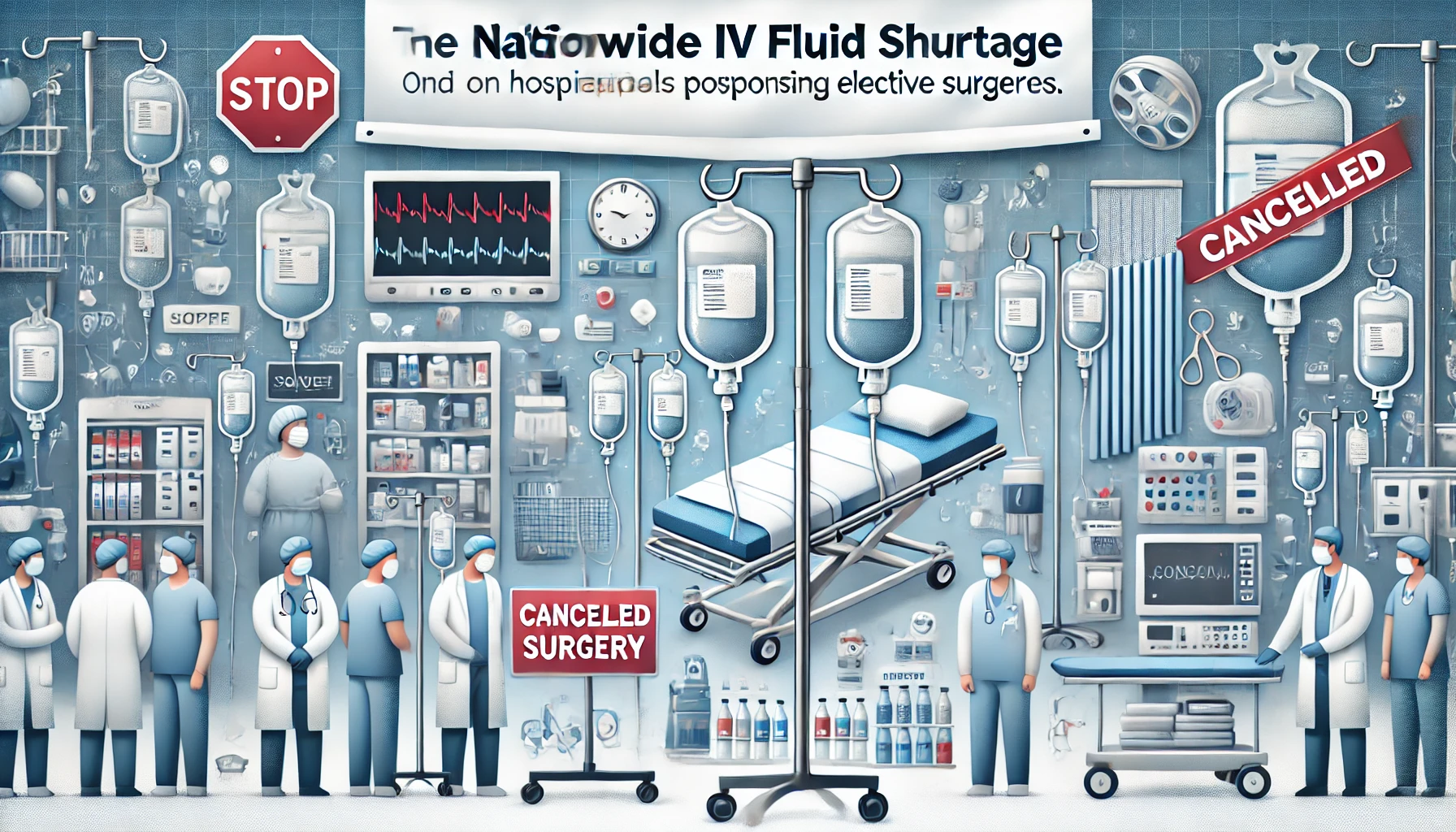
The U.S. Hospital Crisis: IV Fluid Shortages and How Storms Are Impacting Medical Supplies
The recent storm season in the U.S. has left hospitals across the country scrambling to maintain a stable supply of IV fluids. The closure of the Baxter International plant, a key supplier of IV saline and other medical fluids, has heightened concerns about the IV fluid shortage. As hospitals grapple with reduced stock and disrupted supply chains, patients and medical staff alike are feeling the pressure.
In this post, we explore how storms are affecting hospital supplies, the ongoing efforts by the FDA to mitigate the crisis, and what this means for patient care in the U.S.
IV Fluid Shortage: How Did We Get Here?
IV fluids are a critical component in hospital care, essential for hydration, medication delivery, and various treatments during surgeries. IV saline and other solutions are used to maintain blood pressure, flush out toxins, and support general health. Unfortunately, the IV fluid shortage is not a new issue; however, recent natural disasters have worsened the situation.
How Hospitals Are Affected by the IV Fluid Shortage
The hospital IV fluid supply is fragile due to the complexities of manufacturing, storage, and distribution. IV fluids are bulky, and hospitals typically don’t stockpile more than a week or two’s worth of fluids, which limits their ability to respond quickly to supply chain disruptions(
)(
).
As a result, many hospitals are now forced to conserve their IV fluid supply by switching to alternative hydration methods, such as oral rehydration solutions (Gatorade or Pedialyte), or limiting the use of IV fluids to only the most critical patients(
).
The Impact of Storms on Hospital Supply Chains
Recent hurricanes, especially Hurricane Helene, have been catastrophic for key production facilities like the Baxter International plant, which is responsible for producing a large portion of the country’s IV fluids. When the plant in North Carolina was hit by the storm, it was forced to close down due to flooding and infrastructure damage(
). This facility’s closure has placed a strain on the entire IV fluid supply chain, causing delays in distribution across the U.S.
How Storm Damage Disrupts Medical Supplies
Natural disasters like hurricanes not only damage factories, but they also disrupt the transportation and distribution of medical supplies. Flooded roads, damaged bridges, and power outages all contribute to the logistical challenges of getting IV fluids and other medical supplies where they are needed most(
).
The storm impact on hospital supplies goes beyond IV fluids. Hospitals also struggle to maintain stocks of medicines, surgical tools, and other critical supplies when supply chains are disrupted by storms. The healthcare sector is particularly vulnerable to these disruptions because many facilities rely on a few large manufacturers to produce vital products(
).
FDA Response to the IV Fluid Shortage
In response to the crisis, the FDA has stepped in to work with Baxter International and other suppliers to manage the shortage. The agency is collaborating with manufacturers to expedite the production of IV fluids and has approved the import of additional supplies from overseas(
). This effort is intended to prevent hospitals from running out of fluids during emergencies and surgeries.
FDA’s Role in Approving IV Fluid Imports
The FDA’s response to the IV fluid shortage includes fast-tracking the import approval of IV fluids from international suppliers to fill the gaps left by the plant closures(
). By approving imports from places like Brazil and Europe, the FDA aims to stabilize the supply and ensure that hospitals can continue to operate smoothly.
The IV fluid import approval by the FDA highlights the global nature of the medical supply chain. While U.S. manufacturers are critical, international production facilities play a vital role in maintaining the availability of essential medical products(
).
Baxter Plant Closure: The Cause of the Supply Chain Crisis
The Baxter IV fluid plant closure has had a profound impact on the U.S. healthcare system. As one of the largest manufacturers of saline solutions in the country, Baxter International holds more than 50% of the market share for IV fluids. With its factory in North Carolina out of commission, the entire industry has felt the strain(
).
Rebuilding After the Baxter International Shutdown
Rebuilding the factory and restoring normal operations will take time. According to the company, the damage caused by the storm has left the facility covered in mud and debris. Reopening the factory could take months, depending on how quickly the company can repair the infrastructure(
).
While Baxter International has begun sending workers back to the site to assess the damage and start the recovery process, the timeline for getting the plant back online remains uncertain. In the meantime, hospitals are being asked to ration their supplies of IV fluids, and elective surgeries may be delayed as a result(
).
How Hospitals Are Coping with the IV Fluid Supply Chain Crisis
Hospitals across the U.S. have developed strategies to manage the IV fluid shortage as best they can. Many healthcare facilities are revisiting old protocols from past shortages, such as the one triggered by Hurricane Maria in 2017, which also disrupted the production of IV saline(
).
Creative Solutions to Conserve IV Fluids
Hospitals have adopted creative solutions to conserve their limited supply of IV fluids:
- Switching to oral hydration: For patients who don’t need IV fluids but still require hydration, hospitals are encouraging the use of oral rehydration options, such as sports drinks and electrolyte solutions(
).
- Reducing waste: Some hospitals have implemented policies to ensure that partially used IV bags are not discarded unnecessarily, helping to stretch their current supplies(
).
- Limiting elective surgeries: To prioritize emergency care, some hospitals are postponing elective surgeries to conserve IV fluids for critical patients(
).
The Future of IV Fluid Supply in the U.S.
The recent IV fluid shortage has underscored the fragility of the U.S. medical supply chain. As climate change intensifies and natural disasters become more frequent, hospitals and manufacturers must find ways to become more resilient to supply chain disruptions.
Strengthening the Supply Chain
One potential solution is for hospitals to diversify their suppliers and reduce their reliance on a small number of manufacturers like Baxter International. By building relationships with more suppliers, including international ones, healthcare facilities could improve their ability to weather future shortages(
)(
).
Additionally, hospitals may need to increase their storage capacity for bulky items like IV fluids, so they have larger reserves available during crises.
Conclusion: Managing the Ongoing IV Fluid Shortage
The U.S. is facing a critical IV fluid shortage as storms disrupt the supply chain and facilities like Baxter International work to recover from damage. Hospitals are adapting to the shortage by conserving supplies, rationing fluids, and prioritizing care for the most critical patients. With the FDA stepping in to approve the import of IV fluids from overseas, there is hope that the situation will improve in the coming months.
However, the storm impact on hospital supplies serves as a reminder of how vulnerable the healthcare industry is to natural disasters and supply chain disruptions. As hospitals and manufacturers work to strengthen their systems, ensuring a stable IV fluid supply will remain a top priority for the future.
For more insights into how industries manage supply chain crises, visit Regent Studies and explore the latest strategies for building resilience in the healthcare sector.
For further information on the FDA’s response to the IV fluid shortage, you can also read the latest updates from the FDA’s official site.