
Boeing Strike 2024: Understanding the Union’s Fight and Labor Disputes
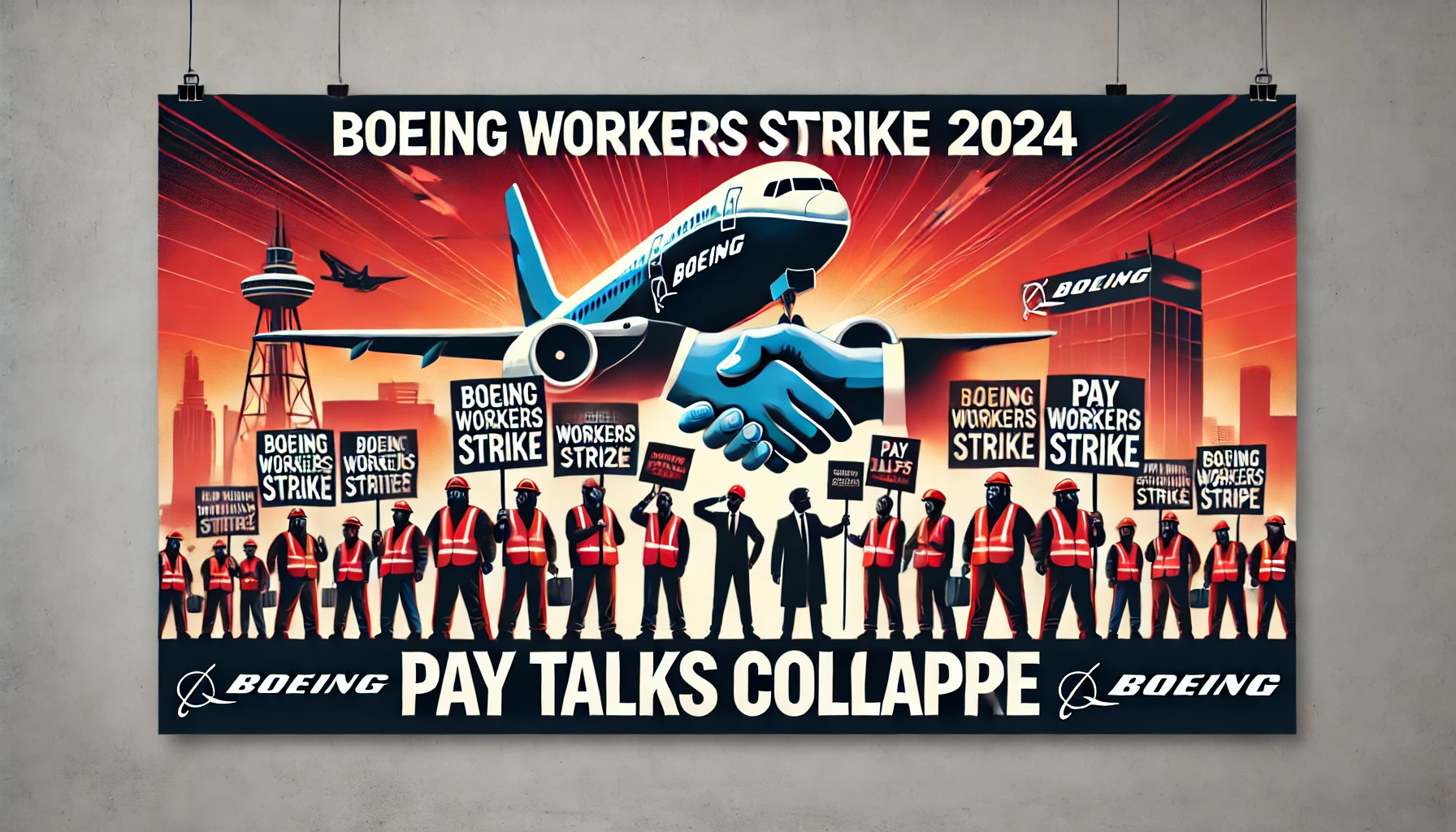
In 2024, one of the largest labor strikes in recent years hit Boeing, as union workers walked out in protest over collapsed contract negotiations. Thousands of members of the International Association of Machinists and Aerospace Workers (IAM)—the union representing Boeing workers—voted overwhelmingly to strike, marking a critical moment in the ongoing Boeing union strike. The collapse of pay talks between Boeing and the union has led to a standoff, with both sides digging in for what could be a long and drawn-out labor dispute.
As the Boeing workers strike 2024 continues, this blog will explore the key issues that led to the strike, the demands of the union, and what this means for both Boeing and its employees.
The Boeing Strike 2024: How It All Began
The Boeing strike 2024 began in early August when Boeing union workers overwhelmingly rejected a contract proposal from the company. The contract negotiations between Boeing and the union had been going on for several months, but after a series of back-and-forth offers, the talks reached an impasse. Boeing offered a 25% pay increase over four years, but many workers felt the proposal did not go far enough to address rising costs of living, especially in the wake of inflation and higher healthcare costs(
).
The failure of the Boeing contract negotiations sparked a wave of frustration among union members, many of whom had been struggling with stagnant wages and growing living expenses for years. The last major pay deal between Boeing and its workers occurred over a decade ago, and union members argue that wage increases since then have not kept pace with inflation. As a result, nearly 94% of union members voted to strike(
).
Boeing Union Pay Dispute: Key Issues
The Boeing union pay dispute centers around several key issues, including wages, benefits, and job security. Union workers are demanding higher pay increases, better healthcare benefits, and guarantees that Boeing will not cut jobs or move production to other states or countries.
Pay Increases and Benefits
One of the main sticking points in the Boeing union strike has been the issue of pay. Boeing initially proposed a 25% general wage increase spread over four years, but union members argue that this is not enough to offset years of stagnating wages. Additionally, many workers were upset that Boeing’s proposal included the removal of a performance bonus, which had been a key part of previous contracts(
)(
).
Union members also expressed frustration over the rising cost of healthcare. Many workers reported that their healthcare premiums and out-of-pocket costs had increased significantly in recent years, cutting into their take-home pay. The union has called for Boeing to address these healthcare concerns by offering more affordable options.
Job Security
In addition to wages and benefits, job security has been a major point of contention in the Boeing union pay dispute. Many workers fear that Boeing may shift production to other states or countries, putting their jobs at risk. The company has previously moved some operations to other states in an effort to reduce labor costs, a move that has raised concerns among union members(
).
The union is demanding guarantees from Boeing that jobs will remain secure in the U.S., particularly at key manufacturing plants in Washington state and South Carolina, where Boeing produces its 737 and 787 aircraft.
Boeing Workers Strike 2024: Impact on Production
As the Boeing workers strike 2024 continues, it is already having a significant impact on Boeing’s production capabilities. Boeing relies heavily on its machinists and aerospace workers to assemble its commercial airplanes, and with the strike in full swing, production delays are becoming inevitable.
Delays in Aircraft Deliveries
Boeing had already been grappling with production delays due to supply chain issues and technical problems with its 737 MAX aircraft. The ongoing strike has exacerbated these challenges, leading to further delays in aircraft deliveries to customers. Industry experts warn that if the strike continues, Boeing could face additional penalties from airlines that are waiting for new planes(
).
Boeing’s management has acknowledged the seriousness of the situation, but the company has not yet indicated whether it will return to the negotiating table. The longer the strike drags on, the more costly it becomes for Boeing, both in terms of lost production and potential damage to its reputation(
).
Financial Impact on Boeing
The Boeing labor dispute has also raised concerns among investors. Boeing’s stock has already experienced fluctuations since the strike began, and some analysts predict that the company could lose millions of dollars if the strike is not resolved soon. Additionally, Boeing is facing stiff competition from European rival Airbus, which has been ramping up production of its own commercial aircraft(
).
The Role of the Machinists Union (IAM)
The Boeing machinists union, formally known as the International Association of Machinists and Aerospace Workers (IAM), plays a crucial role in representing the interests of Boeing workers. The union has a long history of organizing strikes and negotiating contracts on behalf of its members, and it has been a powerful force in the aerospace industry.
IAM’s Demands
The IAM Boeing union has made it clear that its members are prepared to stay on strike for as long as it takes to secure a fair deal. The union is pushing for higher wages, improved benefits, and guarantees that Boeing will not move jobs out of the U.S. Union leaders have stated that they are willing to continue negotiations, but only if Boeing is willing to make meaningful concessions(
).
Union Leadership Under Pressure
The union leadership has faced pressure from both sides. While some union members have expressed frustration that the leadership did not take a harder stance earlier in the negotiations, others have rallied behind the union’s efforts to secure a better deal. On the other side, Boeing’s management has criticized the union for its refusal to accept the company’s offer, arguing that the 25% wage increase was fair and in line with industry standards(
).
Boeing Pay Talks Collapse: What Happens Next?
The collapse of the Boeing pay talks has left many wondering what comes next. Will Boeing return to the negotiating table, or will the strike continue indefinitely? At this point, it is difficult to say. Both sides remain entrenched in their positions, and with no clear resolution in sight, the strike could last for weeks or even months.
Potential Outcomes
If Boeing agrees to return to the table, the union will likely push for a higher wage increase and better benefits. However, if Boeing refuses to make further concessions, the strike could escalate, leading to more production delays and financial losses for the company.
In the meantime, the impact of the strike is being felt not only by Boeing workers but also by the broader aerospace industry. Suppliers, airlines, and customers are all watching closely to see how the situation unfolds.
Boeing’s Labor Dispute in 2024
The Boeing strike 2024 has highlighted the growing tensions between labor and management in the aerospace industry. The breakdown of the Boeing contract negotiations and the resulting Boeing union strike have placed significant pressure on both sides to find a resolution. As the strike drags on, the impact on production, jobs, and the company’s financial health will continue to grow.
For more information on labor relations and negotiation strategies in industries like aerospace, visit Regent Studies for expert insights and analysis.
For further reading on Boeing’s ongoing labor dispute, check out this article from Fast Company on the challenges faced during the Boeing union pay dispute.