NASA’s Hubble Discovers Unexpected Black Holes in the Early Universe
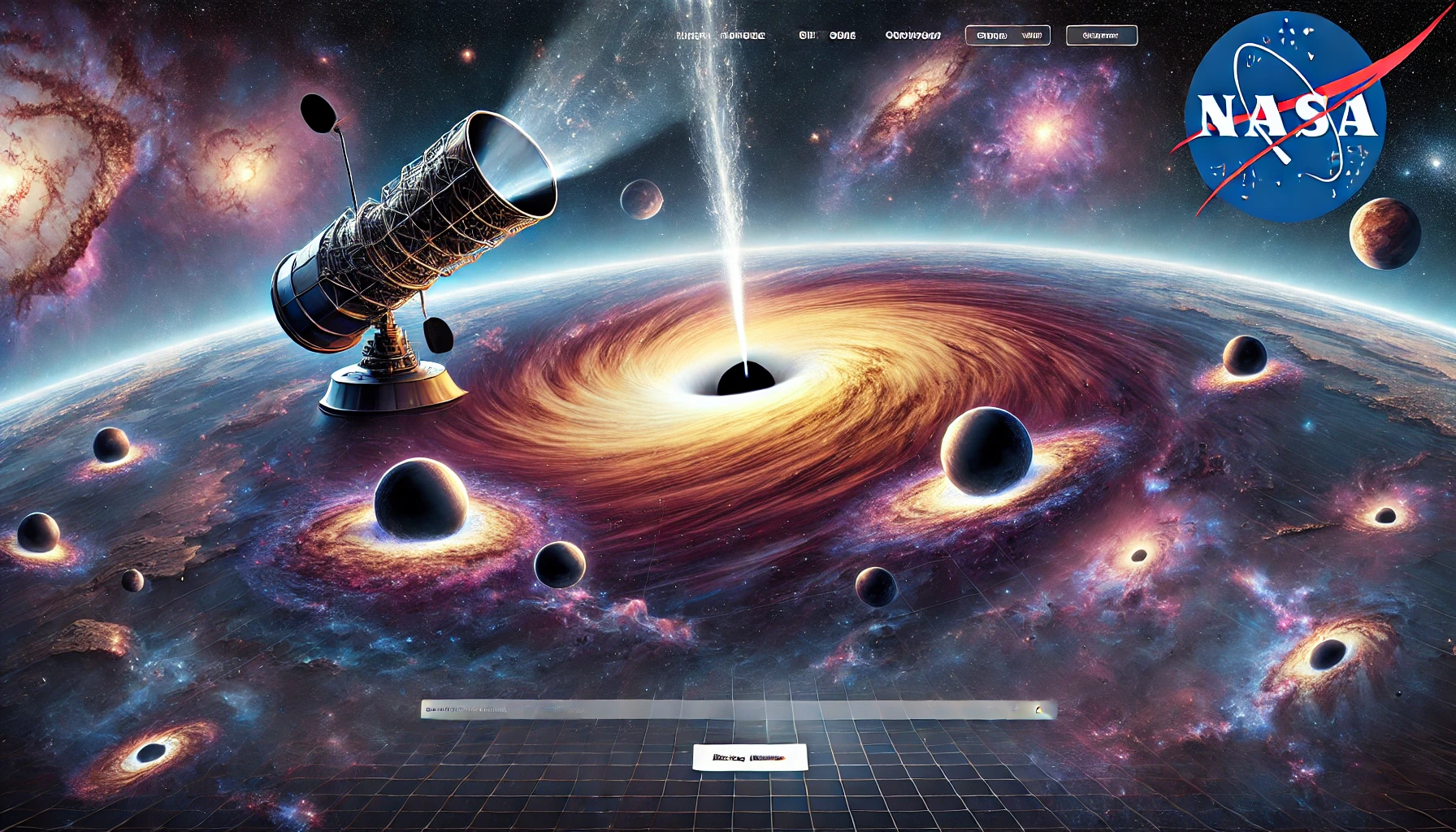
Astronomers have long been fascinated by black holes, those mysterious, gravitational wells of the universe that trap everything, including light. But recent discoveries by NASA’s Hubble Space Telescope have revealed that there are far more black holes in the early universe than previously thought. This groundbreaking discovery has left scientists rethinking how black holes formed and evolved over time, especially in the early stages of the universe’s existence.
In this post, we’ll explore what NASA’s Hubble has uncovered, how these discoveries challenge existing theories of black hole formation, and what this means for our understanding of the early universe.
Hubble’s Discovery of More Black Holes Than Expected
Using NASA’s Hubble Space Telescope, astronomers were able to peer deep into the early universe and make a surprising discovery: there are more black holes than previously predicted. These findings emerged as scientists were observing some of the most distant galaxies, which are located over 13 billion light-years away from Earth. Through these observations, they found an unusually high number of supermassive black holes at the centers of early galaxies(Labroots)(ScienceDaily).
Previously, it was believed that black holes in the early universe were relatively rare. However, Hubble’s new data has turned this assumption on its head, revealing that more black holes than expected formed shortly after the Big Bang. This challenges previous models of how and when black holes, especially supermassive black holes, began to form(Labroots).
How Did Hubble Find More Black Holes?
The Hubble Space Telescope is one of the most powerful tools astronomers have for observing distant galaxies. By looking back in time to when the universe was just a few hundred million years old, Hubble detected faint traces of black holes at the centers of young galaxies. These black holes were pulling in gas and dust, creating bright flares of light known as quasars(Labroots)(ScienceDaily).
Hubble’s ability to detect such distant objects is due to its high-resolution imaging, which allows it to capture the faint light of galaxies that are billions of light-years away. Using this data, scientists were able to estimate the number of supermassive black holes in the early universe and were shocked to find that the number was far greater than they had anticipated(Labroots).
Early Universe Black Holes: A Growing Mystery
The discovery of early universe black holes has raised important questions about the formation of these enigmatic objects. How could so many black holes form so quickly after the Big Bang? Current models suggest that supermassive black holes take millions, if not billions, of years to grow by feeding on surrounding material. However, the new findings suggest that many black holes reached massive sizes within the first billion years of the universe’s existence(ScienceDaily).
Why Are There More Black Holes in the Early Universe Than Expected?
One possibility is that black holes in the early universe may have grown through rapid, violent collisions between massive stars. These collisions could have created large black holes in a relatively short period. Another theory is that supermassive black holes formed directly from the collapse of massive gas clouds, skipping the usual stellar evolution process entirely(ScienceDaily).
Regardless of the formation mechanism, the fact that there are more black holes than expected in the early universe is a puzzle that scientists are eager to solve. This discovery has led researchers to reevaluate their models of black hole formation and how these cosmic giants shaped the evolution of galaxies(Labroots).
The Role of Supermassive Black Holes in the Early Universe
Supermassive black holes, which are millions to billions of times more massive than our sun, play a crucial role in the formation and evolution of galaxies. In the early universe, these black holes may have been even more influential than previously thought. As these supermassive black holes grew, they emitted powerful jets of radiation and energy, shaping the galaxies around them(ScienceDaily).
Supermassive Black Hole Formation in the Early Universe
The discovery of supermassive black holes in the early universe suggests that these objects formed much faster than scientists once believed. Typically, black holes form when massive stars collapse at the end of their life cycles. Over time, they grow by consuming gas, dust, and even other stars. However, the new data indicates that some supermassive black holes may have formed directly from massive clouds of gas soon after the Big Bang(Labroots).
This process, known as direct collapse, could explain how these black holes reached such enormous sizes so quickly. It’s possible that in the early universe, conditions were just right for supermassive black holes to form directly from dense gas clouds without the need for intermediate stages like star formation(ScienceDaily).
NASA’s Hubble Space Telescope: A Window Into the Past
The Hubble Space Telescope has been instrumental in reshaping our understanding of black hole formation and the early universe. Its ability to capture detailed images of distant galaxies has allowed scientists to peer billions of years into the past, providing unprecedented insights into the growth of black holes(Labroots).
Hubble’s Impact on Black Hole Research
Hubble’s data has revolutionized our understanding of black holes. Before its launch in 1990, black holes were thought to be rare, and their role in galaxy formation was not well understood. However, Hubble’s observations have shown that supermassive black holes are common in the centers of galaxies, and their formation may have been a key driver in the evolution of the universe(ScienceDaily).
By observing the distant universe, Hubble has provided evidence that black hole growth was a major factor in the development of galaxies. The new discoveries of black holes in the early universe suggest that these objects may have been even more important than previously thought(ScienceDaily).
The Future of Black Hole Research
The discovery of more black holes in the early universe than expected has opened the door to new research opportunities. With the upcoming launch of the James Webb Space Telescope, astronomers hope to gain even more detailed insights into the formation of supermassive black holes and how they influenced the development of galaxies(Labroots)(ScienceDaily).
The James Webb Space Telescope will be able to observe even more distant objects than Hubble, allowing scientists to peer further back in time. By studying these early black holes, researchers hope to answer some of the biggest questions about how the universe evolved.
A New Understanding of Black Holes
NASA’s Hubble Space Telescope has once again reshaped our understanding of the cosmos. The discovery of more black holes than expected in the early universe challenges previous theories and raises new questions about how black holes formed and grew in the first billion years after the Big Bang. These supermassive black holes, which are now known to be far more common in the early universe, may have played a crucial role in shaping the galaxies we see today.
As we continue to explore these discoveries, it’s clear that black hole formation is one of the most intriguing and complex phenomena in astrophysics. With new tools like the James Webb Space Telescope, the mysteries of black holes in the early universe may soon become clearer.
For more in-depth educational content on astronomy and space science, visit Regent Studies, your go-to resource for expanding your knowledge of the universe.
For further details on NASA’s findings, you can explore the ScienceDaily report on early universe black holes.