The Rise of Nuclear Clocks: A New Era in Ultraprecise Timekeeping
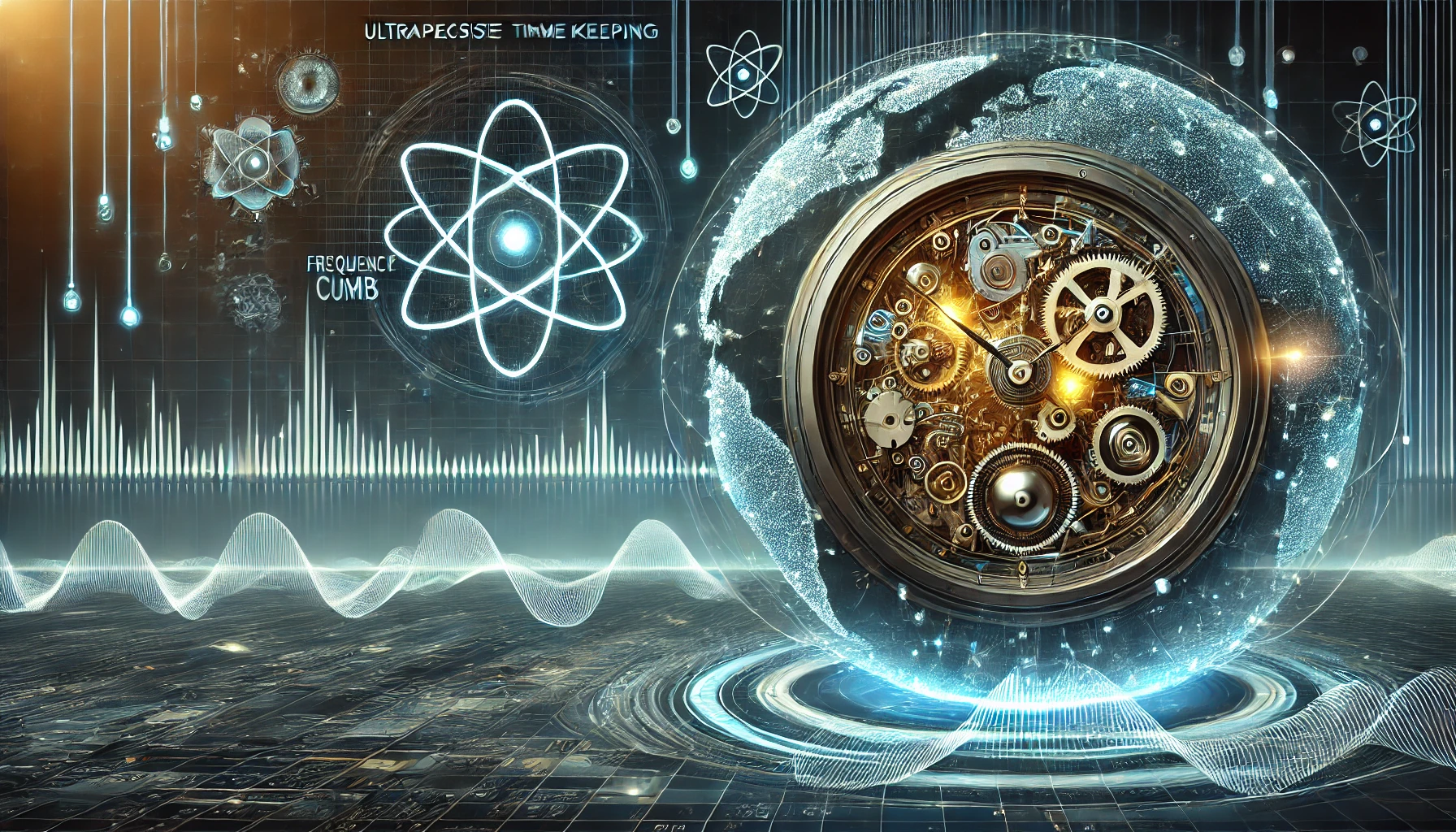
In the realm of timekeeping, humanity has come a long way from sundials to atomic clocks. Now, with the development of nuclear clocks, we stand on the brink of a revolution in ultraprecise timekeeping. Nuclear clocks promise to outpace the precision of their atomic counterparts, and they could potentially redefine how we measure time. These advances may impact various fields, from global communications to fundamental physics, and even provide tools for detecting dark matter.
This article explores the technology behind nuclear clocks, how they differ from atomic clocks, and the groundbreaking possibilities they offer for the future of timekeeping.
What is a Nuclear Clock and How Does it Work?
A nuclear clock is a highly precise timekeeping device that measures time based on transitions within an atom’s nucleus rather than its electron cloud, as is the case in atomic clocks. In atomic clocks, time is measured by tuning lasers to frequencies that cause electrons to jump between energy levels, creating consistent “ticks.” However, nuclear clocks focus on the transitions within the nucleus itself, which are far more stable and less affected by external disturbances.
The most promising candidate for this technology is the Thorium-229 clock, which uses the nuclear transition frequency of the Thorium-229 isotope to mark the passage of time. This isotope has the lowest known nuclear excitation energy, which makes it easier to manipulate with available technology like ultraviolet lasers(Nature)(
Why Nuclear Clocks Are More Precise Than Atomic Clocks
The current gold standard for timekeeping is the optical atomic clock, which uses optical frequencies to measure the energy jumps of electrons. However, the energy levels in an atom’s electron cloud can be influenced by various external factors such as electromagnetic fields or temperature changes, leading to small inaccuracies over long periods. In contrast, nuclear energy transitions are much less susceptible to these influences, making nuclear clocks potentially much more stable.
When comparing atomic clocks vs nuclear clocks, the latter could theoretically be 100 times more precise, making them capable of measuring time to an even more granular degree(Nature)(Phys.org). With precision this high, nuclear clocks could remain accurate for billions of years without losing a second, providing unparalleled stability in timekeeping.
The Role of the Frequency Comb in Nuclear Clocks
One key piece of technology in the development of nuclear clocks is the frequency comb, a tool that can measure light waves with extreme accuracy. A frequency comb essentially acts like a ruler for light, allowing scientists to measure the “ticks” of the nuclear transition frequency with incredible precision. This technology is crucial in linking nuclear clocks with existing atomic clocks, creating a bridge between the two timekeeping methods(Phys.org).
Applications for Nuclear Clocks: Beyond Timekeeping
The precision offered by nuclear clocks could have far-reaching implications across various industries and scientific fields. Some potential applications include:
1. Global Navigation Systems
The enhanced precision of nuclear clocks could significantly improve global navigation systems, including GPS. Current systems rely on atomic clocks to synchronize satellites, but nuclear clocks would provide even more accurate positioning data, which could be critical for autonomous vehicles, military operations, and even space exploration(NIST).
2. Quantum Timekeeping and Computing
In the field of quantum timekeeping, nuclear clocks could be a game-changer. Their precision could support the development of quantum technologies, including quantum computing and secure communications. Additionally, their stability might help scientists better understand quantum phenomena, pushing the boundaries of our knowledge of physics(Phys.org).
3. Dark Matter Detection
One of the most exciting potential uses for nuclear clocks is in fundamental physics research, including the search for dark matter. By comparing the nuclear transition frequency over time, scientists might detect slight variations that could be evidence of the influence of dark matter or other forces at play in the universe(IFLScience)(NIST). This could open a new chapter in our understanding of the cosmos and lead to discoveries that were previously out of reach.
Thorium-229: The Future of Timekeeping
The use of Thorium-229 in nuclear clocks has piqued the interest of researchers because of its unique properties. Thorium-229 has an isomer with an extremely low excitation energy, which means it can be manipulated using ultraviolet light rather than the more powerful X-rays typically needed to excite nuclear transitions. This makes it much more practical for use in a portable clock(Nature)(IFLScience).
The goal is to embed Thorium-229 atoms in a solid-state crystal, which would make nuclear clocks not only more accurate but also more compact and robust. These clocks could one day be used in portable devices, providing ultraprecise timekeeping in everyday technology like smartphones, aircraft, and even wearable tech.
Challenges and the Road Ahead
While the potential for nuclear clocks is immense, challenges remain before they can fully replace atomic clocks. For one, the technology to manipulate the nuclei in a reliable, scalable way is still in its early stages. Additionally, while frequency combs provide incredible accuracy, they need to be further refined to ensure the highest levels of precision.
Moreover, the infrastructure to deploy nuclear clocks on a large scale has yet to be built. Still, ongoing research is moving the field forward, and many experts believe it’s only a matter of time before these clocks are widely adopted in industries ranging from finance to space exploration.
The Promise of Nuclear Clocks for Ultraprecise Timekeeping
The nuclear clock represents a monumental leap in ultraprecise timekeeping, with the potential to transform not only how we measure time but also how we navigate, communicate, and explore the universe. With the advances in frequency comb technology and the use of Thorium-229 for nuclear transitions, these clocks could soon surpass atomic clocks in accuracy and reliability.
From improving GPS systems to aiding in the detection of dark matter, the applications for nuclear clocks extend far beyond keeping time. As research progresses, the possibilities for this groundbreaking technology are endless, making nuclear clocks a key player in the future of timekeeping.
For more information on the science behind timekeeping and related technological advancements, visit Regent Studies.
To learn more about nuclear clocks and their development, check out NIST’s article on the breakthrough in nuclear clock research.