
The Next Planetary Alignment in 2024: Key Dates and What to Expect
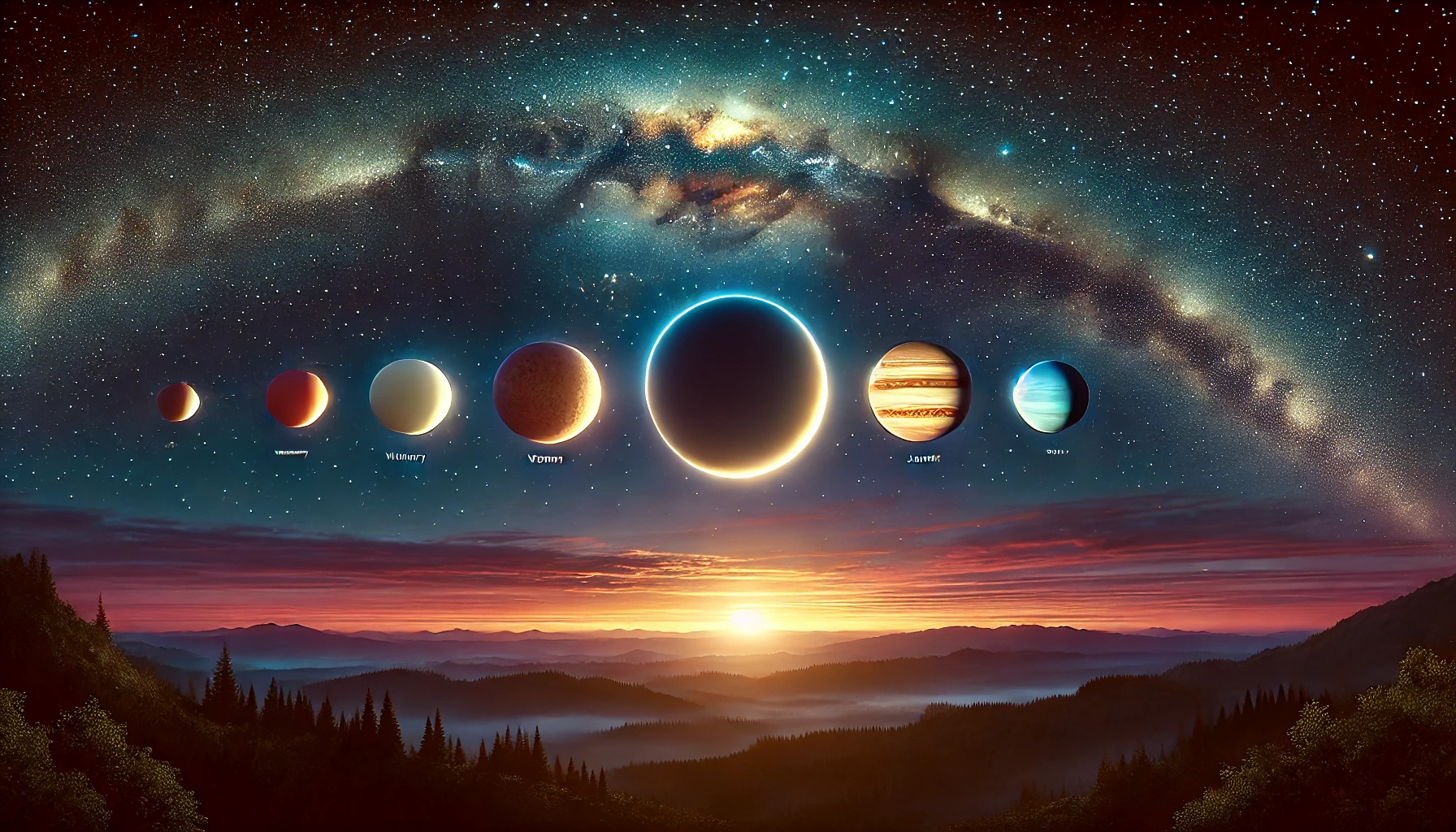
Planetary alignments are celestial events that have long fascinated both astronomers and astrology enthusiasts. These rare occurrences, where multiple planets in our solar system line up in a straight line, offer stunning visual spectacles and are often linked to astrological interpretations. In 2024, we are set to witness one such planetary alignment, and this blog will explore what that means, when it will occur, and the broader significance of these alignments.
What is a Planetary Alignment?
A planetary alignment happens when several planets in our solar system appear to line up in a relatively straight line as viewed from Earth. This phenomenon occurs due to the unique orbital paths of the planets around the Sun. While perfect alignments are rare and difficult to observe, partial alignments where several planets come close to a straight line are more common and still captivating.
Though it may seem like these planets are physically aligning, they remain millions of kilometers apart. From our perspective on Earth, however, these planetary conjunctions make the planets appear clustered together in the sky.
Planetary Alignment in 2024: What to Expect
One of the most anticipated planetary alignments in 2024 will occur in June. During this alignment, five planets—Mercury, Venus, Mars, Jupiter, and Saturn—will be visible in the night sky. This alignment offers an exciting opportunity for both amateur astronomers and professionals to observe multiple planets in a single evening.
When is the next planetary alignment? The 2024 planetary alignment is expected to peak on June 16, offering the best viewing conditions for sky-watchers. The alignment will be visible just after sunset and can be seen from most parts of the world, weather permitting.
Why Are Planetary Alignments Important?
Planetary alignments hold special significance both in astronomy and astrology. Scientifically, these alignments offer an opportunity to observe multiple planets with ease. Alignments also provide valuable data for astronomers studying planetary motion, orbits, and gravitational interactions within our solar system.
In astrology, planetary alignments are often seen as having powerful effects on human behavior and global events. Many astrologers believe that the combined gravitational pull of aligned planets can influence moods, decision-making, and even historical events. While these claims are not supported by scientific evidence, they continue to capture the imagination of many.
The Meaning of Planetary Alignments in Astrology
From an astrological perspective, planetary alignments are viewed as significant events that influence the energies of the planets involved. Each planet in astrology is associated with different aspects of life—Mercury with communication, Venus with love, Mars with action, Jupiter with expansion, and Saturn with discipline. When these planets align, astrologers interpret it as a time of intense energy, potential challenges, or great opportunities, depending on the planets involved.
The effects of planetary alignment in astrology are often described as periods of change or upheaval. For instance, during a rare planetary alignment, astrologers may predict global shifts or personal transformations. While these interpretations vary, planetary alignments hold a special place in astrological traditions.
Rare Planetary Alignments and Historical Significance
While the upcoming 2024 alignment is exciting, it is not considered a particularly rare event. However, there have been several rare planetary alignments throughout history that have captivated scientists and astrologers alike.
One of the most famous rare planetary alignments occurred in 1962 when all the planets from Mercury to Saturn were in conjunction. Another notable alignment took place in 1982, involving six planets. These rare events are often linked to significant historical moments, though any connection is purely coincidental.
Looking ahead, the next extremely rare alignment will occur in 2161, when all eight planets will line up—a spectacle that won’t be seen again for over a century.
Solar System Alignments: A Broader Perspective
Solar system alignment refers to the alignment of not just a few planets but the entire solar system. While the term is often misused to describe planetary alignments, true solar system alignments are exceedingly rare and have yet to occur in recorded history. This is because each planet follows a different orbital path, making it almost impossible for all planets to align perfectly.
However, partial alignments, like the one set to occur in 2024, allow us to witness a small part of the vast cosmic dance that takes place within our solar system. These planetary conjunctions give us a glimpse into the complexity and beauty of planetary motion.
The Astrology of Planetary Alignment 2024
Astrologically, the planetary alignment of 2024 is expected to bring significant changes. Many astrologers believe that alignments like this one can amplify the energies of the planets involved, making it a potent time for transformation, growth, and self-reflection.
For example, with Venus and Mars—the planets of love and action—in alignment, some astrologers predict heightened passion, intense relationships, and dynamic personal changes. Meanwhile, Jupiter’s involvement may indicate expansion, optimism, and growth, while Saturn brings discipline and structure to these energetic shifts.
Whether you follow astrology or not, the planetary alignment in 2024 offers a unique opportunity to reflect on both the cosmic and personal forces at play in our lives.
How to View the Planetary Alignment in 2024
If you’re interested in witnessing this planetary alignment, there are a few tips to ensure the best possible viewing experience:
- Find a Clear View: The best places to view planetary alignments are areas with minimal light pollution. Try to find an open area away from city lights, such as a park or rural location.
- Use Binoculars or a Telescope: While the alignment will be visible to the naked eye, using binoculars or a small telescope will provide a more detailed view of the planets involved.
- Check the Weather: Clear skies are essential for viewing the alignment. Be sure to check your local weather forecast ahead of time.
- Download a Skywatching App: Apps like Star Walk or SkySafari can help you track the planets’ positions and ensure you don’t miss the alignment at its peak.
A Rare Celestial Event
The planetary alignment in 2024 is shaping up to be an exciting event for both amateur and professional astronomers alike. With five visible planets lining up in the night sky, it offers a rare chance to observe the beauty and complexity of our solar system. Whether you’re interested in the scientific or astrological meaning of planetary alignments, the event promises to be a spectacular celestial show.
For those curious about the effects of planetary alignment in astrology, 2024 could mark a period of significant personal and global changes. While scientific evidence does not support these astrological claims, they remain a fascinating lens through which many people interpret celestial events.
As we approach June 2024, make sure to mark your calendars and prepare for one of the most exciting astronomical events of the year.
For more educational content and resources on astronomy and space science, be sure to visit Regent Studies.
External Source for Further Reading: For up-to-date information on planetary alignments, visit NASA’s Astronomy Events.