
Fireballs in the Pacific Northwest: Meteor Sightings Over Oregon and Beyond
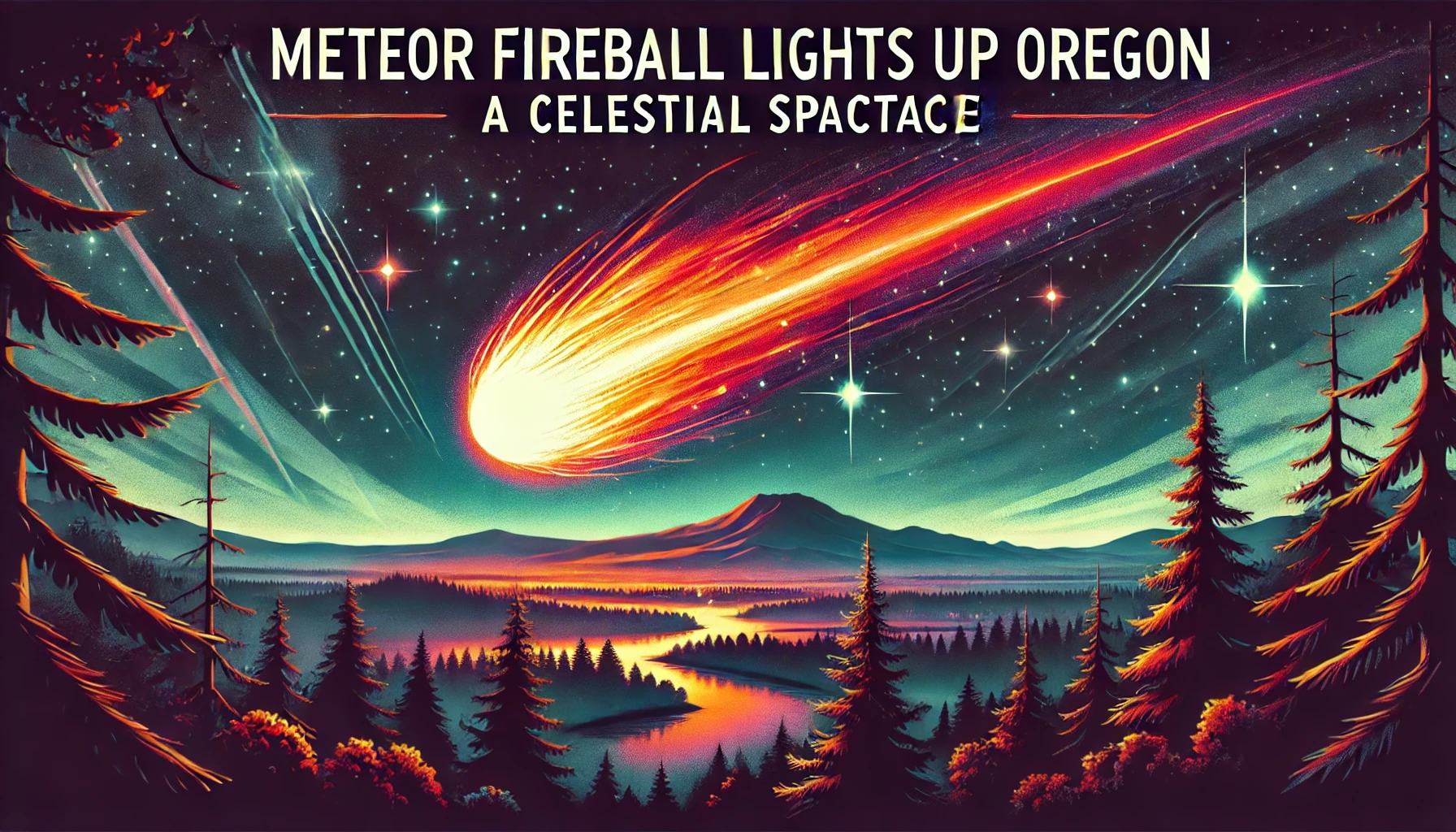
A remarkable event occurred in the skies above Western Oregon on Monday night, as a bright meteor fireball streaked across the region, leaving many witnesses in awe. This fiery spectacle wasn’t just a local event but was visible across the Pacific Northwest, creating a buzz among skywatchers and meteor enthusiasts. Such sightings remind us of the incredible celestial events that take place regularly above our heads. In this blog, we’ll dive into the details of this fireball meteor event, explore the science behind meteor fireballs, and explain why Oregon and the Pacific Northwest are often prime locations for such sightings.
What is a Meteor Fireball?
A meteor fireball is essentially a bright meteor that burns up as it enters Earth’s atmosphere, producing a dramatic streak of light in the sky. Fireballs are larger and more intense than regular meteors, often compared to a shooting star but on a much grander scale. This particular Western Oregon fireball captured the attention of thousands of people, with some even reporting that the fireball illuminated the night sky for several seconds, making it one of the most memorable bright meteor sightings of the year.
The term “fireball” is used by astronomers to describe extremely bright meteors, typically those that are brighter than Venus in the night sky. In rare cases, these fireballs can break apart and create even more stunning visual effects, such as a glowing trail or multiple fragments.
Why Are Fireballs So Bright?
A fireball meteor event occurs when a meteoroid, which is usually a small piece of a comet or asteroid, enters the Earth’s atmosphere at high speed. As it plummets toward the surface, friction with the air causes the meteoroid to heat up and disintegrate, producing a bright streak of light. If the object is large enough, it can create a green meteor fireball, depending on the materials it contains. For example, meteors with high nickel content can emit a green hue as they burn up in the atmosphere.
Oregon: A Hotspot for Meteor Sightings
Monday night’s meteor over Oregon was not an isolated event. The state, along with the Pacific Northwest, is often a prime location for meteor fireballs and other celestial phenomena. There are several reasons why Oregon is such a great place for meteor sightings:
- Clear Skies: Oregon frequently experiences clear skies, especially in rural areas away from city lights, which makes it easier to spot shooting star sightings and other celestial events.
- Geographical Location: The Pacific Northwest is positioned in a way that allows for excellent views of meteor showers, and the region’s latitude makes it ideal for witnessing bright meteor sightings.
- Low Light Pollution: Many areas in Oregon have low levels of light pollution, particularly in more remote regions like Central Oregon, making the night sky more visible and providing perfect conditions for observing events like the Western Oregon fireball.
The American Meteor Society plays a crucial role in documenting these events, collecting witness reports, and helping researchers better understand the frequency and characteristics of meteors. After the meteor over Oregon, the Society received numerous reports from people who saw the fireball, capturing videos and photos of the event, which were later analyzed.
The Role of the American Meteor Society
The American Meteor Society is a nonprofit organization that tracks and investigates meteors, fireballs, and other astronomical phenomena. The Society collects data from citizen scientists and amateur astronomers, encouraging anyone who witnesses a fireball meteor event to submit a report. This allows researchers to gather important information about meteor trajectories, compositions, and the potential for any meteoroids to reach the Earth’s surface.
In the case of the Western Oregon fireball, the American Meteor Society received over 150 reports, many of which were accompanied by videos from doorbell and security cameras. This widespread participation helps scientists to triangulate the position and path of the meteor, providing a detailed analysis of the event. These reports confirmed that Monday night’s fireball meteor was visible across several states in the Pacific Northwest, highlighting how far-reaching these events can be.
The Science Behind Fireball Meteors
So, what exactly makes a fireball meteor so extraordinary? The answer lies in its size, speed, and composition. Meteoroids that cause fireballs are usually larger than typical meteors, sometimes measuring several meters in diameter. When these objects enter the Earth’s atmosphere, they travel at speeds of up to 72 kilometers per second (45 miles per second), creating intense friction and heat. This causes the meteoroid to break apart and vaporize, producing the bright light associated with fireball meteor events.
Some fireballs, like the green meteor fireball, can emit different colors depending on the materials they contain. For example:
- Nickel and magnesium: Emit a green hue.
- Sodium: Produces a yellow glow.
- Iron: Creates orange or red tones.
Additionally, the energy released by larger fireballs can create a sonic boom, which some witnesses reported hearing during Monday night’s fireball over Oregon.
What Happens to the Fireball?
While many fireball meteor events burn up completely in the atmosphere, some meteoroids are large enough to survive the journey and reach the Earth’s surface as meteorites. In Monday night’s event, experts from the American Meteor Society indicated that it was unlikely any fragments reached the ground, but this is not always the case. When fragments do survive, they are often sought after by scientists and meteorite hunters, as they can provide valuable insights into the composition of celestial bodies.
How to Spot a Meteor Fireball
If you missed the Western Oregon fireball or are hoping to catch the next one, there are a few tips to improve your chances of spotting a bright meteor sighting or a shooting star:
- Find a Dark Sky Location: To maximize visibility, head to a location far from city lights. Rural areas or national parks often offer the best views of the night sky.
- Check Meteor Shower Calendars: Meteor showers are predictable, and knowing when they peak can increase your chances of seeing a fireball meteor. The American Meteor Society regularly updates their calendar of celestial events.
- Be Patient: Watching the night sky for meteors requires patience. Bring a comfortable chair or blanket, and be prepared to spend a few hours watching the sky.
Upcoming Meteor Showers
Several meteor showers occur each year, providing opportunities for shooting star sightings and possibly even fireballs. Popular showers like the Perseids, Geminids, and Leonids are known for producing frequent meteors, some of which can be as bright as Monday night’s fireball meteor over Oregon.
For more information on upcoming meteor showers and celestial events, check out Regent Studies, where you’ll find educational resources and tools for skywatching.
A Celestial Spectacle Worth Watching
The fireball meteor event over Western Oregon was a reminder of the incredible and dynamic universe we live in. With the Pacific Northwest providing the perfect backdrop for such sightings, residents were treated to a celestial spectacle that will be remembered for years to come. Whether you’re an experienced astronomer or a casual skywatcher, witnessing a meteor fireball is an awe-inspiring experience, and Oregon’s clear night skies make it one of the best places in the country to catch these fiery streaks.
By following the tips above and staying informed about future meteor showers, you can improve your chances of witnessing the next bright meteor sighting or shooting star in the night sky.