Understanding Supernova Remnants, Zombie Stars, and Cosmic Leftovers: The Aftermath of Stellar Explosions

The universe is full of mysteries, and among the most fascinating are the remnants left behind after a supernova explosion. These cosmic events not only create spectacular displays in the sky but also leave behind remnants such as zombie stars, neutron stars, and pulsars. The study of supernova remnants, including the leftover star core remnants, helps us understand the life cycle of stars and the ongoing evolution of the cosmos. In this blog, we will delve into the aftermath of stellar explosions, exploring the formation of supernova remnants and the enigmatic zombie stars.
Supernova and Its Aftermath: Remnants of Cosmic Explosions
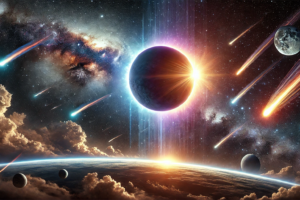
A supernova is one of the most powerful and awe-inspiring events in the universe. When a massive star exhausts its nuclear fuel, it can no longer support its own gravity, leading to a catastrophic collapse and subsequent explosion. This explosion, known as a supernova, ejects most of the star’s material into space, leaving behind various types of remnants.
Supernova Remnant: The Aftermath of Destruction
The supernova remnant is the structure resulting from the explosion. It consists of the ejected material, as well as the shocked interstellar medium. These remnants can be observed in multiple wavelengths, from radio to X-rays, revealing a wealth of information about the explosion and the properties of the interstellar medium.
Key characteristics of supernova remnants:
- Shape and Size: Supernova remnants are typically spherical, but they can become irregular due to interactions with the surrounding interstellar medium.
- Composition: The remnants contain elements such as oxygen, carbon, and silicon, which are crucial for the formation of new stars and planets.
- Lifespan: Over time, the remnant expands and cools, eventually dispersing its materials into the interstellar medium.
The study of supernova remnants helps astronomers understand the process of element formation and distribution throughout the galaxy, as well as the conditions that lead to the formation of new stars.
Star Death Remnants: The Fate of Collapsed Stars
When a star goes supernova, it often leaves behind a collapsed star. Depending on the mass of the original star, this remnant can become a neutron star, a white dwarf, or, in some cases, a black hole. These star death remnants are critical in understanding the life cycle of stars.
Neutron stars are incredibly dense objects formed from the collapsed core of a massive star. They are typically only about 20 kilometers in diameter but contain more mass than the Sun. Pulsars, a type of neutron star, emit beams of radiation that can be detected as regular pulses, hence the name. White dwarfs are remnants of smaller stars that have shed their outer layers, leaving behind a dense core.
The discovery of these star core remnants provides insights into the extreme conditions that exist in the universe, offering a glimpse into the final stages of stellar evolution.
Zombie Stars: The Stars That Refuse to Die
The concept of a zombie star is both intriguing and mysterious. A zombie star refers to a star that survives a supernova explosion, either by reigniting or by being reignited through interactions with another star or remnant. These stars challenge our understanding of the death and rebirth of stars.
What is a Zombie Star?
A zombie star is essentially a star that has experienced a supernova explosion but continues to shine or even reignite. This phenomenon occurs in binary star systems where one star’s explosion impacts the companion star, potentially causing it to reignite or survive in a new state. Zombie stars are rare and difficult to detect, but their existence suggests that stellar death is not always the final chapter.
Characteristics of zombie stars:
- Reignition: Some zombie stars reignite after the supernova, fueled by material from a companion star.
- Survivors: In certain cases, the star may survive the explosion relatively intact, continuing to shine as a dim, persistent light.
- Astrophysical Significance: Zombie stars offer clues about the complex interactions between stars in binary systems and the potential for stellar rebirth.
The study of zombie stars is still in its infancy, but these stars may hold the key to understanding the full range of outcomes that can occur following a supernova explosion.
Types of Stellar Remnants: From Neutron Stars to White Dwarfs
The remnants of a supernova explosion vary depending on the mass and composition of the original star. The most common remnants are neutron stars, pulsars, and white dwarfs, each with unique characteristics and astrophysical significance.
Neutron Stars and Pulsars
Neutron stars are the collapsed cores of massive stars. These objects are incredibly dense, with a mass greater than the Sun packed into a sphere only about 20 kilometers across. Pulsars are a type of neutron star that emits regular pulses of radiation as they spin, making them some of the most precise clocks in the universe.
- Neutron Star Properties: Neutron stars are composed almost entirely of neutrons, with a crust of nuclear material and possibly an exotic core of quarks or other particles.
- Pulsar Emissions: Pulsars emit beams of radiation that sweep across the Earth as the star rotates, creating regular pulses detectable by radio telescopes.
White Dwarf Stars
White dwarf stars are the remnants of smaller stars that have shed their outer layers, leaving behind a dense, cooling core. These stars are typically the size of Earth but contain the mass of the Sun, making them incredibly dense. White dwarfs will eventually cool and fade over billions of years, becoming cold, dark remnants known as black dwarfs.
Cosmic Leftovers: The Material Left Behind
After a supernova explosion, not all material is incorporated into the remnants. Some of it is dispersed into space as cosmic leftovers. These materials include dust, gas, and elements that can eventually coalesce to form new stars, planets, and even life.
Key aspects of cosmic leftovers:
- Element Formation: Supernovae are responsible for creating many of the heavy elements found in the universe, including iron, gold, and uranium.
- Interstellar Medium: The leftover material enriches the interstellar medium, providing the raw materials for the next generation of stars.
- Planetary Formation: The dust and gas left behind can form planetary systems around new stars, contributing to the ongoing evolution of the cosmos.
The Continuing Mystery of Stellar Death and Rebirth
The study of supernova remnants, zombie stars, and cosmic leftovers provides a deeper understanding of the life cycle of stars and the complex processes that govern the universe. These remnants are not just the ashes of dead stars; they are the seeds of future celestial bodies, playing a critical role in the ongoing evolution of the cosmos.
As we continue to explore these remnants, we uncover more about the nature of supernovae and the stars they leave behind. For more in-depth studies on cosmic phenomena and stellar evolution, you can visit Regent Studies.
For more information on the latest discoveries related to supernovae and stellar remnants, check out NASA’s Supernova Research.